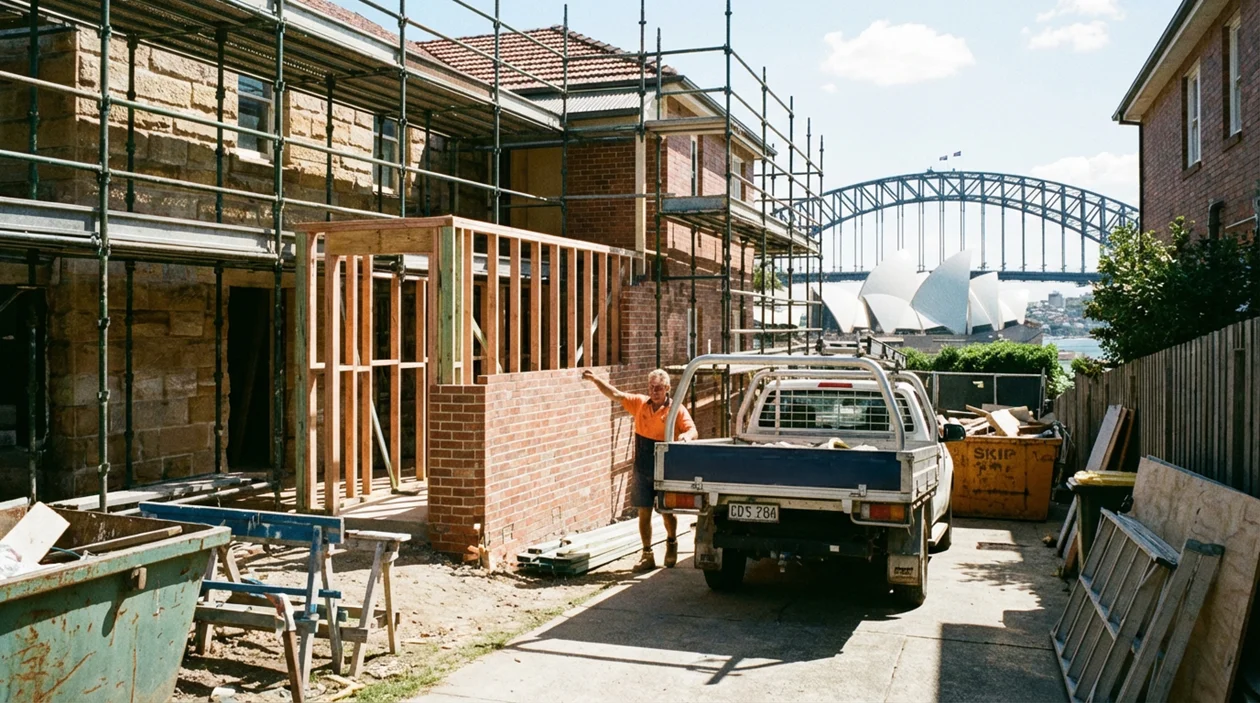
Yes, you can renovate a duplex, but the scope depends entirely on the property title. Torrens Title duplexes generally allow significant structural changes (including knockdown-rebuilds) with council approval. Strata Title duplexes require Body Corporate approval for any external changes or structural alterations. In Australia, a full cosmetic renovation typically starts at $100,000, while structural renovations and extensions often exceed $300,000.
Before you request a single quote or sketch a floor plan, you need to check one document: your Certificate of Title. This single piece of paper determines whether you’re about to embark on a straightforward renovation or navigate a maze of strata bylaws and neighbour negotiations.
Renovate or Knockdown-Rebuild Your Duplex
The decision between renovating your existing duplex and starting fresh isn’t purely financial. While rebuilding often works out cheaper per square metre ($1,800–$3,000 versus $2,000–$4,000 for renovation), renovation typically costs less overall because you’re retaining existing assets like foundations, framing, and services.
The shared wall complicates both options. Renovation means working around existing fire separation requirements and potentially disturbing your neighbour’s peace for months. Knockdown-rebuild requires formal party wall agreements and careful engineering to protect the adjoining dwelling during demolition.
| Factor | Duplex Renovation | Duplex Knockdown-Rebuild |
|---|---|---|
| Cost estimate | $2,000–$4,000 per sqm | $1,800–$3,000 per sqm |
| Approval pathway | Faster (often Complying Development) | Slower (DA required) |
| Shared wall risk | High (noise/structural) | Complex (party wall agreements) |
| Best suited for | Cosmetic updates, kitchen/bathroom upgrades | Layout changes, fixing structural defects |
Rebuilding a duplex makes more sense when ceiling heights are below 2.4 metres, the existing layout fundamentally doesn’t work, or you’ve discovered structural rot or termite damage. Renovating a duplex wins when your budget sits under $300,000, the bones are sound, and you’re primarily updating finishes and services.
Check out our more indepth article on Knock-down rebuild vs Renovations for more details.
The Red Flags of Duplex Renovation
Duplex renovations carry unique risks that don’t apply to freestanding houses. Identifying these early saves you from costly surprises mid-project.
The shared wall problem sits at the heart of most duplex renovation complications. Fire separation requirements under the National Construction Code mean you can’t simply knock into that wall to run new services or create openings. Acoustic separation matters too, if your renovation removes or compromises existing insulation, you may be required to upgrade the entire party wall to current standards.
Strata Title constraints create the biggest headaches for NSW renovators. If your duplex is Strata Title (check your Certificate of Title), you cannot renovate “common property” without formal approval from the other owner. Common property typically includes external walls, the roof, driveways, and sometimes even internal structural walls. Before committing to any renovation scope, obtain your strata plan and check the Common Property Memorandum. This document defines exactly what you own versus what’s shared.
Run through these red flags before engaging a builder:
- Is there an active strata dispute with your neighbour? Unresolved conflicts make obtaining necessary approvals difficult or impossible.
- Does the shared wall have documented fire rating certification? Older duplexes often lack compliant separation, which may trigger expensive upgrades.
- Is there only one water meter for both dwellings? Common in older duplexes, this complicates service upgrades and can indicate other shared infrastructure you’ll need to work around.
- Has the other dwelling undertaken unpermitted work? Their non-compliance can affect your approval pathway and create liability issues.
Value Engineering: Avoiding Overcapitalisation
Duplexes carry an inherent price ceiling lower than equivalent freestanding houses on comparable land. This reality shapes every renovation decision—spending $600,000 on a duplex in a suburb where the best examples sell for $800,000 destroys equity rather than building it.
The renovations delivering strongest returns on duplex properties tend to be street appeal improvements like rendering or painting dated brick facades, creating better kitchen-to-outdoor flow by opening the rear of the dwelling, and upgrading bathrooms to contemporary standards. These improvements address the most common buyer objections to duplex living: the dated appearance and disconnected floor plans typical of 1970s–1990s construction.
The pool question deserves careful analysis. Can you install a pool on your side of a duplex? Usually yes, subject to setback requirements and council approval. Should you? Only in established premium suburbs where pools are standard features. In entry-level or middle-market areas, a pool overcapitalises the property, you’ll spend $60,000–$100,000 on an asset that adds perhaps $30,000–$50,000 to the sale price.
Certain changes actively reduce property value. Unpermitted building work (unapproved pergolas, converted garages, enclosed verandahs) creates legal liability and must be disclosed at sale. Reducing bedroom count, even to create larger, more luxurious rooms, shrinks your buyer pool and typically reduces the achievable price. Highly personalised finishes that don’t align with market preferences (bold tile choices, unusual colour schemes) can also deter buyers.
Your Next Steps
Start with the title search. Order a Certificate of Title through NSW Land Registry Services to confirm whether you’re Torrens or Strata Title. If Strata, request a copy of your strata plan and bylaws before scoping any renovation work.
Then, reach out to Jonathan Homes to arrange for a pre-renovation building inspection specifically examining the shared wall construction, roof condition, and any evidence of water ingress or structural movement. The small cost of the inspection regularly saves tens of thousands in unexpected mid-project discoveries.