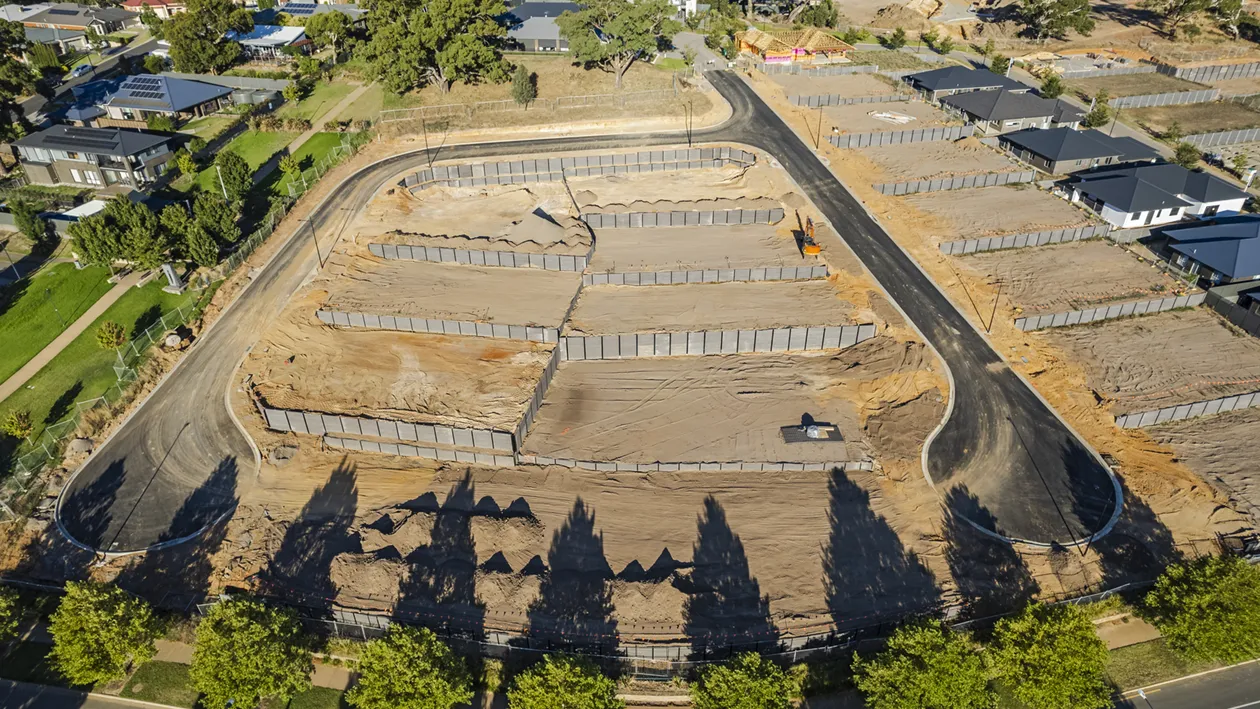
Before you sign a contract or engage a builder, you need to know one thing: can your land actually support a duplex? This guide gives you the hard numbers, the self-assessment checklist, and the financial reality check, so you can make a confident decision today.
Minimum Lot Size & Width Requirements by Region
In general, Australian councils require between 600sqm and 800sqm for a duplex, with a minimum frontage (width) of 15 to 20 metres. However, this varies strictly by council (LGA), and getting it wrong means a rejected DA and thousands in wasted fees.
Use the table below to find the baseline requirements for your area:
| Location | Min Area | Min Width | Typical Zoning |
|---|---|---|---|
| Sydney (Greater) | 450–600m² | 12–15m | R2 Low Density Residential |
| NSW Regional | 600–800m² | 15–18m | R2/R3 Residential |
| Brisbane City Council | 600–800m² | 15m | Low Density Residential |
| Gold Coast | 600–700m² | 15–18m | Low-Medium Density |
| QLD Regional | 700–1000m² | 18–20m | General Residential |
Important: These are baseline figures. Some councils permit dual occupancy on smaller lots (particularly in Sydney’s medium-density zones), while others require significantly more. Always verify with your specific council’s DCP.
Try This Now: Open Google Maps or your state’s Planning Portal. Right-click on your property and select ‘Measure distance’. Measure your street frontage from boundary to boundary. If it’s less than 15 metres, a standard side-by-side duplex is likely impossible, you’ll need to explore front-to-back (battle-axe) designs instead.
How to Know if You Can Subdivide (5-Step Checklist)
Land size is only one factor. You must pass the ‘SWSE’ test: Size, Width, Slope, and Easements. Miss any one of these, and your duplex dreams could stall at the DA stage.
The Duplex Feasibility Checklist
- Zone Check: Is your land zoned R2, R3, or Low-Medium Density Residential? Log into your state’s planning portal (NSW Planning Portal or QLD MyDAS) and search your address. If it’s zoned R1, E2, or RU (rural), dual occupancy is typically prohibited.
- The ‘Rectangle’ Test: Can you fit a 15m x 12m rectangle inside the lot boundaries after accounting for setbacks? This is the minimum footprint needed for two modest 3-bedroom dwellings side-by-side. If your block is irregular, measure carefully—L-shaped and pie-shaped blocks often fail this test.
- Slope Analysis: Does the land fall away from the street? Sites sloping more than 15% face significant additional costs: retaining walls, stepped foundations, and complex stormwater management. A site that falls towards the street is generally more manageable than one falling away from it.
- Easement Check: Order a copy of your title from NSW LRS or QLD Titles Registry. Look for easements marked in red or hatched areas. Sewer easements (typically 2–3m wide) and drainage easements directly impact where you can build. A centrally-located sewer easement can make side-by-side design impossible.
- The 7-Year Rule (NSW Only): If your property was subdivided within the last 7 years, dual occupancy may be restricted under certain LEPs. This catches out investors buying newly-subdivided lots expecting to build again immediately. Check your council’s LEP for specific provisions.
Common Mistake
Buying a corner block thinking it’s easier to subdivide. In reality, corner blocks often have higher setback requirements on both street frontages, reducing your buildable area. What looks like a 700m² block might only have 500m² of usable space after setbacks.
Cost to Build & Financial Traps (CGT & Subdivision)
A standard turn-key duplex build in Australia costs between $600,000 and $900,000+ (excluding land). Subdivision costs can add $40,000–$80,000 depending on your council and site complexity.
Duplex Build Cost Breakdown
| Cost Category | Typical Range |
|---|---|
| Site costs (demolition, excavation, retaining) | $30,000 – $150,000 |
| Construction (both dwellings) | $500,000 – $750,000 |
| Council fees (DA, CC, subdivision) | $15,000 – $40,000 |
| Subdivision (survey, legal, registration) | $25,000 – $50,000 |
| Professional fees (architect, engineer) | $20,000 – $50,000 |
| TOTAL (excluding land) | $590,000 – $1,040,000 |
Avoiding Capital Gains Tax on Subdivision
The tax treatment of your duplex project depends heavily on your intentions and circumstances. Here’s what you need to understand:
Main Residence Exemption: If the property is your principal place of residence and you’ve lived there continuously, you may be entitled to a partial CGT exemption when you subdivide and sell. The exemption typically applies to the portion that was your home, not the newly-created lot.
Developing for Profit: If you purchase land with the intention of subdividing and selling, the ATO may treat your profit as ordinary income (not a capital gain). This means no 50% CGT discount and potentially higher marginal tax rates. The ‘profit-making intention’ test looks at factors like how quickly you sell, your history of similar transactions, and the nature of the development.
GST Implications: Selling newly-constructed dwellings may trigger GST obligations if you’re carrying on an enterprise. This adds 10% to your duplex build costs if you can’t claim it back.
Important: This is general information only. Speak with a qualified accountant before committing to a duplex project—the tax implications can significantly affect your returns. A $20,000 strategy can save you $100,000+ in unexpected taxes.
Standard Duplex Dimensions & Layouts
A comfortable 3-bedroom duplex unit typically requires 150–200m² of internal floor area. With two units, outdoor space, driveways, and setbacks, your total land requirement grows quickly.
Is 30×40 (9m x 12m) a Good Size for a Duplex?
No. This is a common search query that reveals a misunderstanding about duplex requirements. A 30×40 foot lot (approximately 9m x 12m = 108m²) is barely enough for a small single dwelling, let alone two separate homes. To put this in perspective, 108m² is roughly the internal floor area of one modest house, you still need land for the other dwelling, driveways, setbacks, and private outdoor space.
Layout Options Based on Your Frontage
| Frontage | Recommended Layout | Considerations |
|---|---|---|
| 15m+ | Side-by-side (attached or detached) | Best street appeal, easier subdivision, separate driveways possible |
| 12–15m | Front-to-back (battle-axe) | Shared driveway, rear unit has less street presence, may affect resale |
| <12m | Stacked (two-storey) | Usually classified as ‘flats’ not duplex, different approval pathway, strata required |
Ideal lot dimensions: For a comfortable side-by-side duplex with single garages, aim for at least 18m frontage × 35m depth (630m²). This allows for 3m side setbacks, two 6m-wide dwellings, and adequate rear yards.
What if My Land is Too Small?
If your block doesn’t meet the minimum requirements for a duplex, you still have options. Here’s how the alternatives compare:
| Factor | Duplex | Granny Flat | Tiny House |
|---|---|---|---|
| Min land size | 600–800m² | 450m² (NSW) | Varies/unclear |
| DA required? | Yes (full) | Often CDC only | Grey area |
| Can subdivide? | Yes (Torrens) | No | No |
| Build cost | $600k–$900k+ | $120k–$200k | $80k–$150k |
| ROI potential | High (separate titles) | Moderate (rental) | Low (limited use) |
Can I Put a Tiny House on My Land in NSW?
The short answer is: it’s complicated. Tiny houses on wheels are generally considered ‘caravans’ under NSW planning law and can only be used for short-term accommodation (under 48 hours continuous occupation). For permanent tiny house living, you’d need to meet the same requirements as any other dwelling—including minimum floor areas, connection to services, and compliance with the Building Code of Australia. Some regional councils are more flexible, but metropolitan councils generally aren’t. If you’re serious about a tiny house, speak with your local council planning department before purchasing anything.
Next Steps
Ready to move forward? Here’s your action plan:
- Measure your frontage using Google Maps or your title survey
- Check your zoning via the NSW Planning Portal or QLD MyDAS
- Order your title to identify easements and restrictions
- Book a pre-DA meeting with your local council (usually free)
- Engage a town planner for a feasibility assessment before engaging builders
The cost of proper due diligence is a fraction of the cost of a rejected DA or an unbuildable block. Do your homework first. Want some help throughout the process? Contact the custom home builders at Jonathan Homes, we’d be happy to help!