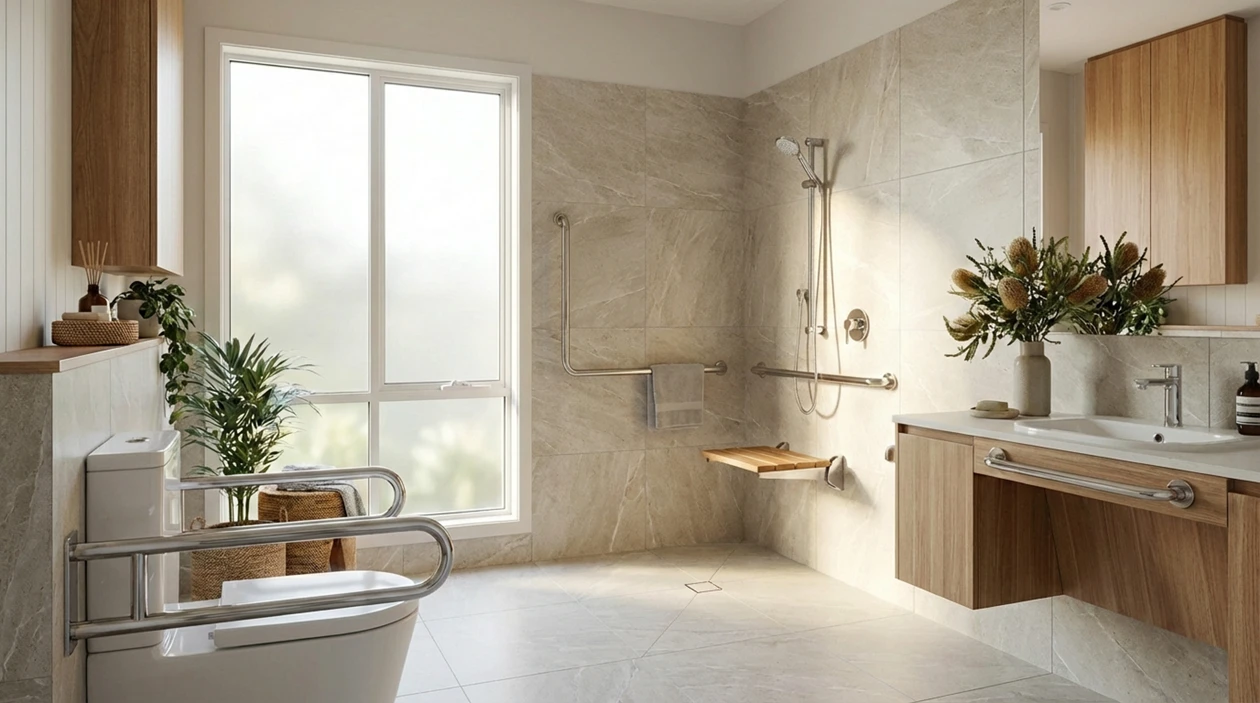
NDIS home modifications are custom changes to the structure, layout, or fittings of a participant’s home designed to ensure safety and independent access. Whether you need grab rails in the bathroom or a complete bathroom rebuild, the NDIS can fund modifications that directly relate to your disability support needs.
Before diving into the details, there’s one critical distinction you need to understand: the difference between Minor Home Modifications and Complex Home Modifications.
Minor Home Modifications (MHM) cost under $10,000, require less evidence, and typically move through approval faster. Think grab rails, lever taps, or non-structural ramps.
Complex Home Modifications (CHM) involve structural changes, higher costs, and require detailed Occupational Therapist reports, builder quotes, and often council permits. Think bathroom rebuilds, doorway widening, or platform lifts.
Which category your modification falls into shapes everything from the paperwork you’ll need to how long approval takes.
What Constitutes an NDIS Home Modification?
Not every change to your home qualifies for NDIS funding. The modification must directly address barriers created by your disability and support your functional capacity at home.
Covered vs. Not Covered Matrix
| YES (Covered) | NO (Not Covered) |
|---|---|
| Access ramps (timber, concrete, aluminium) | Swimming pools or spas |
| Grab rails and handrails | General kitchen renovations for aesthetics |
| Stepless/accessible showers | Granny flats or secondary dwellings |
| Door widening for wheelchair access | Garden landscaping unrelated to access |
| Platform lifts and stairlifts | Air conditioning (unless medically necessary) |
| Non-slip flooring in wet areas | Fixtures that benefit all household members equally |
| Height-adjustable benchtops | Repairs or general maintenance |
| Automatic door openers | Security systems (unless disability-specific) |
How to Secure NDIS Home Modification Funding (Step-by-Step)
Getting your home modification approved requires a specific sequence of actions. Skip a step or do them out of order, and you’ll face delays or outright rejection.
Step 1: The OT Assessment (The Critical Foundation)
An Occupational Therapist must prescribe your modification. This isn’t optional—without an OT report, your application won’t progress.
The OT visits your home, assesses how your disability creates barriers in your current environment, and produces a report recommending specific modifications with measurements and specifications.
Questions to Ask Your OT:
- “Will your report specify the exact dimensions and specifications builders will need?”
- “Are you including functional goals that link the modification to my NDIS plan?”
- “Will you outline what happens if this modification isn’t funded?”
- “Can you provide a prioritised list if multiple modifications are needed?”
Your OT report is the backbone of your application. A vague report leads to requests for further information and weeks of delays.
Step 2: Gathering Builder Quotes
The NDIS requires quotes to verify costs and ensure value for money.
Quote Requirements:
- Modifications under $15,000: One quote required
- Modifications over $15,000: Two quotes required
Quote Request Email Template:
Subject: NDIS Home Modification Quote Request
Dear [Builder Name],
I’m seeking a quote for NDIS-funded home modifications at [address]. Please find attached the OT report with specifications.
Could you please provide a detailed quote that includes:
- Itemised costs for materials and labour
- Relevant NDIS support item codes
- Timeline for completion
- Confirmation of your NDIS registration status (if applicable)
- Evidence of public liability insurance
Please contact me if you need to arrange a site inspection.
Step 3: Submission
Upload your documents through the myplace portal or submit through your Plan Manager or Support Coordinator.
Required Documents:
- OT assessment report with recommendations
- Builder quote(s) meeting NDIS requirements
- Photos of current setup (showing barriers)
- Homeowner consent (if you’re renting, landlord written approval)
- Council permits (if required for structural work)
Try This Now
Walk through your home today and draft a list of “Safety Barriers” you experience. Note specific situations: “I cannot step over the bath edge,” “I cannot reach the kitchen bench from my wheelchair,” “I cannot grip the standard door handles.” This list helps your OT understand your daily challenges during the assessment.
Understanding Costs and the NDIS Price Guide
The NDIS uses the Assistive Technology, Home Modifications and Consumables Code Guide to determine reasonable costs for modifications. Prices are capped based on your location using the Modified Monash Model (MMM) classification—regional and remote areas may attract higher rates.
Funding Tiers
Tier 1 — Simple (Under $10,000)
Non-structural modifications like grab rails, lever taps, or portable ramps. Often approved quickly if already included in your plan’s capacity building or capital budgets.
Tier 2 — Minor ($10,000–$20,000)
Non-structural but more substantial modifications. May include accessible bathroom fittings, widening internal doorways (without structural changes), or installing ceiling hoists.
Tier 3 — Complex (Over $20,000 or Structural)
Major structural changes requiring building permits. Includes bathroom rebuilds, external ramps with footings, platform lifts, or home extensions for accessibility.
Common Costs Cheat Sheet
| Modification | Typical Cost Range |
|---|---|
| Grab rails (per rail installed) | $150–$400 |
| Timber ramp | $800–$1,500 per metre |
| Aluminium modular ramp | $400–$900 per metre |
| Stepless shower conversion | $8,000–$25,000 |
| Door widening (non-structural) | $1,500–$3,500 |
| Door widening (structural) | $3,500–$8,000 |
| Platform lift | $15,000–$40,000 |
| Ceiling hoist system | $6,000–$15,000 |
These figures are indicative only. Your actual costs depend on your location, existing home structure, and specific requirements outlined in your OT report.
For current pricing, refer to the NDIS Pricing Arrangements and Price Limits document for the relevant financial year.
Finding and Hiring NDIS-Registered Builders
Who you can hire depends on how your plan is managed.
Agency-managed participants must use NDIS-registered providers for most modifications, particularly Complex modifications.
Plan-managed and self-managed participants can choose registered or non-registered builders, though using experienced NDIS builders often means fewer complications.
Builder Vetting Checklist
Before engaging any builder, ask these questions:
Insurance and Compliance
- “Do you hold current public liability insurance? Can I see the certificate?”
- “Are you licensed with the relevant state building authority?”
- “Have you completed NDIS audits or worked with NDIS participants before?”
NDIS Experience
- “Are you familiar with NDIS quoting requirements and support item codes?”
- “Do you handle council permit applications, or is that my responsibility?”
- “Can you provide references from previous NDIS home modification projects?”
Payment Terms
- “What deposit do you require?”
- “Do you invoice through the NDIS portal or issue invoices for plan manager payment?”
Thankfully, here at Jonathan Homes we can provide answers to all of these questions and have numerous case studies of NDIS home modifications we have completed in the past. Contact us today if you would like a quote on completing NDIS home modifications in Sydney.
Troubleshooting: The Deposit Problem
Many builders request 10–20% deposits upfront. However, NDIS funding typically only releases payment upon completion or at agreed milestones.
Solutions:
- Negotiate milestone payments (e.g., 30% at materials delivery, 70% at completion)
- Ask your Support Coordinator to facilitate payment arrangements
- For self-managed participants, clarify your funding release timeline with the builder upfront
- Some plan managers can arrange partial early payments with appropriate documentation
If a builder demands large upfront payments without flexibility, consider this a red flag and seek alternative quotes.
Moving Forward
Home modifications through the NDIS require preparation, documentation, and patience. Starting with a thorough OT assessment, gathering compliant quotes, and understanding which funding tier applies to your modification sets you up for smoother approval.
If your first application is knocked back, request specific feedback on what additional evidence is needed. Many initially rejected applications succeed on review with stronger documentation. Want to work with a builder in Sydney who has years of experience completing various NDIS home modifications? Speak to Jonathan Homes today!