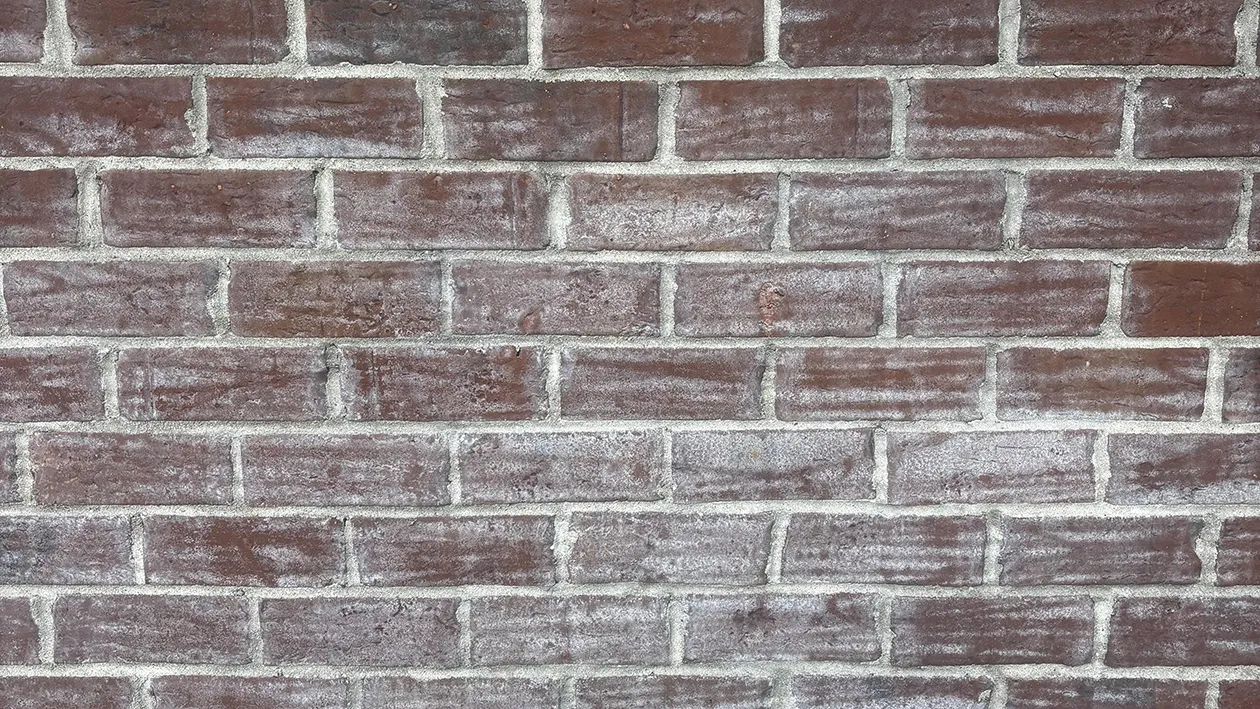
Efflorescence is the powdery white salt deposit left behind when water evaporates out of brickwork or concrete. It is not harmful to touch. But recurring efflorescence is a symptom, not a cosmetic problem. It tells you water is getting into the masonry and moving through it. To remove it permanently, you have to stop the moisture source first, then clean, then seal.
We see this constantly across Sydney’s Inner West. Older sandstock and double brick homes in Five Dock, Haberfield, Leichhardt and Burwood are the usual candidates, where original damp-proof courses have failed or garden beds have crept up against the wall over the decades. The white staining is usually the first visible sign that something behind the brick needs attention.
Is your efflorescence normal or a sign of a leak?
Not all efflorescence means trouble. New masonry carries construction moisture and will push salts to the surface for the first several months. If your brickwork is more than a year old and the staining keeps returning, water is getting in from somewhere.
Two quick tests will tell you which one you are dealing with.
Test 1: The wet test
Spray the affected brick with a garden hose. If the white powder temporarily disappears while wet and reappears once the wall dries, it is efflorescence (water soluble salts). If it stays visible when wet, you are looking at calcium carbonate or builder’s scum, which is a harder deposit needing a different treatment.
Test 2: The age test
| Situation | What it means | Action |
|---|---|---|
| Brickwork under 12 months old | Primary efflorescence from construction moisture curing out | Monitor. Dry brush only. Usually self-resolves |
| Brickwork over 12 months, first appearance | Secondary efflorescence from a new water source | Investigate before cleaning |
| Recurring after previous cleaning | Active, ongoing moisture ingress | Diagnose the leak. Cleaning alone will fail |
| Staining spreading upward from ground level | Likely rising damp or a bridged damp-proof course | Get a builder to inspect |
Inspect these three areas today
- Gutters and downpipes directly above the stain. Blocked or overflowing gutters are the single most common cause we find. Water sheets down the wall face and soaks the brick.
- Ground level against the wall. Soil, mulch, garden beds, concrete paths or new paving that sit above the damp-proof course will bridge it and wick moisture straight into the brickwork. The DPC needs clear separation from the ground. While you are down there, check whether the same ground level has buried any subfloor vents, because a blocked vent traps moisture under the floor for the same reason a bridged DPC pushes it into the wall.
- Plumbing and irrigation nearby. Leaking irrigation or sprinkler lines, a dripping tap, a failed shower waterproofing membrane on the other side of the wall, or an air conditioning condensate line discharging against the brick.
If you find a leak, fix it before you touch the cleaning stage. Cleaning an actively wet wall is a waste of a weekend.
How bad is it? The Australian benchmark
Australia has a formal scale for this. AS/NZS 4456.6 classifies efflorescence into five categories, reproduced in Think Brick Australia’s Industry Reference Guide. It is a laboratory test on sampled bricks rather than a field assessment of a built wall, so treat it as a yardstick rather than a diagnosis.
| Category | Definition | What it means for you |
|---|---|---|
| Nil | No observable efflorescence | Nothing to act on |
| Slight | Not more than 10 percent of any surface covered by a thin deposit | Dry brush and monitor |
| Moderate | More than 10 percent of one surface, up to 50 percent of the total, thin deposit | Investigate the water source |
| Heavy | A deposit covering more than 50 percent of the total brick surface | Active, significant moisture ingress. Get it assessed |
| Severe | Any efflorescence accompanied by powdering or flaking of the brick surface | The brick itself is failing. This is a repair job, not a cleaning job |
That last row is the one to pay attention to. Under the standard, staining that comes with powdering or flaking is no longer classified alongside the cosmetic categories. If you can rub crumbling material off the brick face with your thumb, you are past cleaning. The salt is now crystallising inside the brick and breaking it apart, and the fix is usually a new damp-proof course plus replacing the damaged bricks. This is the point where efflorescence stops being a surface problem and starts to overlap with structural damage in your home.
How do you remove white salt marks from brickwork?
The safest method is dry brushing first, then a mild acidic wash only if the deposit persists, then a thorough rinse. Avoid high pressure washing. It drives moisture deeper into the brick and mortar, which means more salt on the surface within a fortnight.
Before you reach for a bucket: Think Brick Australia, the peak body for Australia’s clay brick manufacturers, advises against rinsing efflorescence off at all. Their Clay Masonry Cleaning Manual notes that water dissolves the salt and lets it soak straight back into the masonry, where it resurfaces once the wall dries. Their recommended method is dry brushing only. Collect the loosened salt in a dustpan or vacuum so it cannot re-enter the brickwork or the paving below, then lift any residue with a damp, wrung-out cloth.
In practice this means the wash phases below are a step you escalate to, not a step you start with. If dry brushing and collection clears the deposit, stop there.
Phase 1: The dry method (always start here)
Use a stiff synthetic brush, or a wire brush on hard-fired common brick only. Scrub the dry salt vigorously, then collect the loosened deposit in a dustpan or vacuum rather than sweeping it into the garden bed at the base of the wall. Never wet the wall first, because water dissolves the salt and carries it back into the brick. Finish by lifting any remaining film with an absorbent cloth wrung out until barely damp, rinsing the cloth often in fresh water and using as little water as you can. On light deposits this is the whole job.
Phase 2: The DIY wash
Only if a deposit survives repeated dry brushing over several dry days. Mix white vinegar and water at 50/50. Dampen the surrounding brick with clean water first so the acid does not soak in. Apply the solution with a sponge or soft brush, let it sit for around five minutes (you will see it fizz), scrub, then rinse thoroughly with fresh water from the top of the wall down. Work in sections of roughly one square metre so nothing dries before you rinse. Expect some salt to return on drying, because you have just introduced water to the wall.
Phase 3: The commercial chemical wash
For stubborn or long-standing deposits, a proprietary sulfamic or phosphoric acid based remover is the right tool. Follow the manufacturer’s dilution rate exactly, always pre-wet the masonry, and always test a hidden patch first.
Common mistakes
| Mistake | What actually happens |
|---|---|
| Using a pressure washer | Forces water into the brick, guaranteeing fresh salt within days |
| Wetting the wall before dry brushing | Dissolves salt and reabsorbs it into the masonry |
| Sweeping or hosing the brushed salt into the garden bed | The salt sits at the base of the wall and wicks straight back up. Collect it in a dustpan or vacuum |
| Skipping the pre-wet before acid | Acid soaks in, etches mortar joints and burns the brick face |
| Inadequate rinsing | Residual acid keeps reacting and can leave a yellow or green stain |
| Working in direct summer sun | Solution dries before rinsing, leaving a chemical film |
| Acid washing heritage sandstock brick | Soft, lime-mortared brickwork can be permanently damaged |
That last one matters in the Inner West. Pre-war sandstock and lime mortar are far softer than modern extruded brick and will not survive an aggressive acid clean. If your home is heritage listed or in a heritage conservation area, get advice before applying anything acidic, and check with your council before starting. Our guide to council approvals for home renovations covers how the NSW approval pathways work.
Self-check: wait 48 hours after cleaning for the wall to dry completely. If white powder returns straight away, the brick is still saturated and you have not found the water source yet.
Which efflorescence remover should you use?
Start with a dry brush and a dustpan. It clears more than most people expect, and it is the only method that does not add water to the wall. If the deposit survives that, mild household acids handle light, recent staining, while heavy or recurring efflorescence needs a purpose-made sulfamic or phosphoric acid cleaner. Dish soap is alkaline and will do nothing at all, because it cannot dissolve salt.
| Product | Best for | Risk or limitation |
|---|---|---|
| Dry brush and dustpan | The default first method for any deposit | No risk. Often sufficient on its own |
| White vinegar (acetic acid), 50/50 | Light dustings on modern brick that survive dry brushing | Introduces water. Can etch soft mortar if not rinsed properly |
| CLR type household cleaner | Small isolated patches | Expensive over large areas, can lighten tinted brick |
| Dish soap | Nothing. Will not dissolve salts | No acid content, purely cosmetic scrubbing |
| Commercial efflorescence remover (sulfamic based) | Heavy or old deposits across a wall | Requires PPE, pre-wetting and full rinsing |
| Diluted hydrochloric acid | Large scale, hard-fired brick | Trade use only. High burn and staining risk |
On heritage, painted or soft sandstock brickwork, stop and get a builder to assess it. The cost of repointing damaged mortar is far higher than the cost of an inspection, and heritage restoration work carries compliance obligations that a standard clean does not. Always wear eye protection and chemical resistant gloves, and protect any plants at the base of the wall.
Why can’t you just paint or seal over it?
Painting or sealing over active efflorescence traps water inside the masonry. The salts continue to crystallise behind the coating and expand, and that pressure blows the face off the brick. That failure is called spalling, and it is not repairable. The brick has to be cut out and replaced. It is the same mechanism that puts a wall into the “severe” category in the table above.
Do not apply paint or sealer until the wall has been clean and dry for at least 30 days.
If you coat it too early, you get the full sequence within about six months: the sealer bubbles, then clouds, then peels, and the salt pushes back through anyway. You have then added a stripping job to the original problem.
How do you stop efflorescence coming back permanently?
Cleaning treats the symptom. Sealing a dry, sound wall is what stops it recurring, and only after the water source is genuinely resolved.
| Step | What to do | Why it matters |
|---|---|---|
| 1. Fix the source | Repair gutters, lower soil below the DPC, fix the leak | Without this, every other step fails |
| 2. Wait | Allow 30 days of dry weather after cleaning | Trapped moisture is what causes spalling |
| 3. Choose a breathable sealer | Use a penetrating sealer (look for silane siloxane on the label), not a film-forming one that sits on top | Masonry must be able to release vapour |
| 4. Apply correctly | Low pressure garden sprayer, wet on wet, two passes | Even penetration, no lap marks |
| 5. Verify | Hose the wall after curing | Water should bead and roll off like a waxed car |
Avoid film-forming acrylic sealers on brick entirely. They look good for a season and then trap the exact moisture you are trying to manage.
If the staining sits above a bathroom, laundry or wet area, the underlying issue is often a failed waterproofing membrane rather than external water. That means opening it up and redoing the waterproofing properly, to AS 3740, not sealing over it from outside. It is one of the reasons waterproofing is a non-negotiable stage in any bathroom renovation.
When to call a builder
Get a professional assessment if any of the following apply:
- The efflorescence returns within weeks of a proper dry brush or clean
- The staining is accompanied by powdering or flaking of the brick face (the “severe” category under AS/NZS 4456.6)
- Staining is spreading upward from ground level (possible rising damp or a bridged DPC)
- Mortar joints are crumbling, or brick faces are blowing out
- The wall is heritage listed, built with soft sandstock brick, or tuckpointed (where the mortar joints have a fine contrasting line ruled into them)
- The affected wall backs onto a bathroom, laundry, balcony or retaining wall
- There is any internal sign of damp: bubbling paint, musty smell, or lifting skirting
Jonathan Homes has repaired and restored brickwork across Sydney’s Inner West for years, including heritage properties with failed damp-proof courses, mould, lead paint and asbestos considerations. You deal with Jonathan directly, start to finish. He is a licensed builder (359604C) and Master Builders Association member, and every job is fixed-price with a 7-year structural warranty.
If white salt marks keep coming back on your brickwork, it is worth finding out what is behind them before it becomes a structural repair.
Call Jonathan on 0414 595 933 for a free consultation.